Showing posts with label themes. Show all posts

Monday, August 23, 2010

Scott Pilgrim vs. the World Review

Overall Grade: C+

Playing like an amped up hybrid of Eternal Sunshine of the Spotless Mind and Kung Fu Hustle, Scott Pilgrim vs. the World triumphs when it appropriates the visual cleverness and silliness of the two aforementioned films, but fails in the delivery of its thematic and emotional content. In a film that revels in shorthand references, allow me to reference a tried but true criticism of films like this, "all style and no substance".

Michael Cera plays Scott Pilgrim, a young adult in search of a life and a new girlfriend. At a party he spots Ramona, and attempts at scoring a date with her. He eventually wins out, but there is a catch. Ramona has a bit of a past, and in order to date Ramona, Scott is forced to fight all seven of her evil ex's. You see, Scott has to fight off Ramona's past that keeps catching up to her and ruining her present, get it?

While I will get to my frustrations with the film, let me first commend several of the appealing aspects of this film. First off, the film is crisply edited and thought out. It is constantly moving, with pacing more reminiscent of Crank and framing reminiscent of the anime and arcade. Continuing the video game theme is the sound design and visual effects that are seamlessly integrated into not only the fight sequences, but throughout the whole film, including a stop in the restroom. It's topped off with several enjoyable performances including a scene stealing Jason Schwartzman.

What undermines the entire film is the 'weightlessness' of the universe that is ultimately created. While I am willing to suspend disbelief for the sake of an interesting premise (that there exists an super-powered league of ex-boyfriends), I'm not willing to buy into a universe that ultimately doesn't reflect the emotional weight and gravity of the real world. Let me explain further.

In what world, outside of Pilgrim's dreams, would someone like the neurotic, jobless, and mumbling Scott Pilgrim be able to land the relationships that he does? He's able to date a 17 year old high school student, Ramona 'the girl of his dreams' and apparently dated the popular lead singer of hot indie band. The film never provides a good reason for the attraction these girls have to him, and vice versa. At least the film attempts to make the girls good looking, providing some reason for Pilgrim's attraction to them. Redeeming character traits or good personalities are to much to ask for in the stylized world. After several awkward meets, Pilgrim essentially beds the 'girl of his dreams', until she puts an impromptu end to it. Even Pilgrim's gay roommate is shown bedding numerous men, including straight men, with nary a wink. These relationships are so light and meaningless, how does anyone (including the audience) really get upset or that emotional about any of them. Let alone enough to create an entire league of angry ex-boyfriends?

This same 'weightlessness' undermines what are technically proficient fight scenes as well. The film never provides sufficient reason why Pilgrim is able to fight (outside of a DDR game) at the onscreen ability shown, nor is there any gravity to the punches and falls he takes. What should be fun and entertaining (these sequences are better shot than ones in The Expendables, but are ultimately less meaningful) became dull as I just waited for them to play out. Nor is there any real connection made between why the entire universe is overlaid with video game graphics (as interesting as it is), except for the reason as to just be there. What's that? You say I should just look past it, and enjoy it because of the playful spirit?

While that may be true in regards to the fighting, it's unforgiveable when the film attempts real lessons at it's conclusion. In the climax of the film, Pilgrim is supposed to have discovered self respect and thus ultimately that the battles he is fighting in life is not for a 'woman' but for self-respect. While that's cute, it would be nice for the rest of the film to support that conclusion. What has Pilgrim come to respect about himself in the end? He is still the same neurotic, jobless, and mumbling guy as he was before. Even without this little thematic twist, the film still plays out exactly the same as if he was just fighting for the girl/ On top of that, what about Ramona's self respect? Does she have to stand by and watch as a boy fights to free her and earn his self respect? What about all the supporting characters who continue on in self-disrespecting lifestyles filled with vulgarity and cheating? Does real self respect and love exist in a world without gravity?

It's a shame because there is really a lot of good stuff on display in this film. By the climax, I really felt as though the film was exactly what you would get had you handed a geeky film student a large budget to make anything he wanted. What you end up with is a heavily stylized and 'cool' universe that floats along without scrutiny, but ultimately crashes to earth when asked to speak to its real-world audience. It's similar to what people are realizing when it comes to 3-D films these days; while it can certainly add razzle-dazzle to a film, if it doesn't help to 'speak' to a real world audience, then it's just another visual effect.

Monday, July 26, 2010

Inception: A Second Look

**Spoilers Contained

This film has more heart and soul than anyone is giving it credit and I deserve part of the blame for that. The general critical narrative for Inception has been that it's a film that features boundless creativity, a great imagination, and a pulse pounding plot; but sadly lacks the emotion to truly involve your heart along with your mind. Upon a second viewing of the film, I think we've got it all wrong. Inception is a film that beams with humanity and features a simultaneous affront and encouragement to its viewer.

In fairness, I think that Christopher Nolan is partly to blame for such a misinterpretation of his own work. The truth is, there is just too much going on within this film to be fully experienced in just one viewing. I'm not saying that it's too complicated, but perhaps too dense to reward a viewer it's fullness with just a single screening; at least it was for me. While I'm still in awe of the ideas at play and the visuals put on screen, my second viewing was more a revelation of themes and heart. Don't get me wrong, I wasn't fighting back tears, but I was touched by several themes that spoke to me in ways I hadn't thought about in my first viewing. It has helped me to reconsider the film, and I hope that you consider them as well. Let me explain.

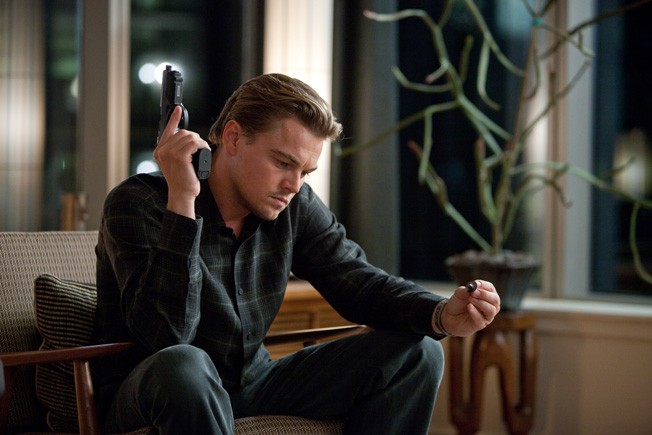
For me, the film's central dramatic struggle was to keep hold of reality. For the most part, this means that our characters want to know if they are in the real world or are in a dreaming state. Although it also stands in for the central idea of inception; are these my real thoughts after all? It provides for great tension in the film, as it's a nagging problem for Cobb (Leonardo DiCaprio) as we see him constantly spinning his top to remind himself of reality.

Interestingly, there are two people in the film who truly do lose sight of what 'reality' is; Cobb's wife Mal and a group of 'shared dreamers' in a Mombasa backroom. In the case of Mal, Cobb informs us that, "...she locked away a secret, deep inside herself, something she once knew to be true... but chose to forget." In this case, she locked away and forgot her totem (the same top that Cobb uses), symbolizing that she has chosen to lose track of reality; accepting the dream world as her new reality. In the Mombasa backroom, we are told that this group of 'shared dreamers' meets everyday for several hours of dreaming (equaling many more hours in the dream world). The overseer then states, "They come to be woken up. The dream is their reality now. Who are you to say otherwise?"

Upon first watch, I felt the Mombasa scene was more or less a throw away sequence intended to show how some have become addicted to the dreaming. In retrospect, it provides a sharp contrast and a strong argument against what would become the major theme of the film. With all that 'shared dreaming' has to offer; the extended lifetime, the creativity, and the experiences; it's not reality and therefore inferior, a shade of our real world.

In Cobb's final confrontation with his wife Mal he must confront the decision of spending a practical eternity with her in their own world ("I miss you more than I can bear, but we had our time together. I have to let you go") and desiring to return to the real world and see his children*. Ultimately, Cobb declares to Mal, "Look at you. You're just a shade, a shade of my real wife. How could I capture all your beauty, your complexity, your perfection, your imperfection, in a dream? Yes, you're the best that I can do. But, I'm sorry, you're just not good enough."

I particularly like this idea that we deserve better than our dreams, we deserve reality. Risk, adventure, loss, tragedy, grief and imperfection are central to the human experience and isn't worth losing even if it means gaining immortality or 'togetherness'. While enlightening, it's not exactly a groundbreaking insight into life and one could possible even argue (as Mal and the Mombasa shared dreamers do) that Cobb is wrong and reality isn't all its cracked up to be. This is where I think the film really shines in that Cobb comes to this insight and conclusion honestly and naturally. It is faith that is required in order to understand Cobb's arrival to truth. This is where Nolan's humanity shines through and the cold precision is put to bed.

When Saito offers Cobb the possibility of clearing his name in return for inception, Cobb asks what assurances Saito could give. The reply is "none" that he would have to take him on good faith. Saito offers, "Dare you take a leap of faith? Or become an old man, filled with regret, waiting to die alone." Cobb decides to take the job, hoping the reality of seeing his children again would be better than becoming old and filled with regret. Similarly, when Cobb and Saito (now an old man) both meet again in limbo, a remarkable exchange takes place,

Saito: You remind me of someone... a man I met in a half-remembered dream. He was possessed of some radical notions.

Cobb: I came here to tell you... something.
[pause]
Cobb: Something that... you once knew to be true.
Saito: [remembering] Impossible...

Cobb and Saito have a vague remembrance that their current world is not reality, that reality was awaiting them, but they would both be required to die for it. There are clues, evidence (the spinning top, vague remembrances) and doubts about what is real and not (and ultimately the film still leaves room for doubt), but it will require faith in order for them to meet reality. It's not a math problem or a scientific experiment, but a journey.

While I think this is a correct interpretation of Inception's central theme, it has reverberated with me so strongly because of its ability to speak to my religious beliefs. As a Christian I believe that there are clues and evidence within our world that points to a creator God and an entire spiritual realm of reality. However, there are still doubts (Man is there doubts!) This isn't a math problem or science experiment, but a journey; one that requires faith. Incredibly, like Cobb and Saito who must give up their world of limbo, (where they have full power and control) and literally die; Christ says that we must also give up our world of power and control and die to ourselves in order find the real truth of our world. I find this incredibly enriching.

Am I saying that Inception is a Christian film? Certainly not. Both seek to speak to the truths of our existence, and in that way they are indeed similar. The film's acknowledgment that there are not only clues to ultimate reality, but also doubt about our reality, makes it surprisingly relatable (especially in our postmodern context). Even more so, the films embracement of the necessity of faith in order to experience the realities of life, makes it thoroughly human. In that sense, I think it speaks not just to Christians, but to anyone who has experienced life. Appropriately there is room to doubt for those who look for it (does that top keep spinning?), but Cobb's and Inception's embracement of the real and rejection of the dream (making it very Matrix-esque), symbolized by Cobb's journey to his children, is a full on emotion and humanity.

In fact, taken to its conclusion, the film almost insults the viewer. Like the shared dreamers of Mombasa, we viewers connect and share this dream with Nolan, projecting our own subconscious into the film. In our ever increasing media society where we consume films, television shows, and video games for hours a day, are we not like those living their lives away in a dream world? To that, the film's exhortation to reject the dream and embrace the fullness that reality has to offer is both an affront and an encouragement to its viewer. Of course it's the best type of affront, a warning and a clarion call, that reality waits beyond the doors of the theatre. This to me is the humanity of the film, and it comprises the true contribution that Inception has to offer.


*This also rings true with Cobb's notion that positive emotion always seems to trump negative emotion. Ultimately, the positive emotion of reuniting with his real children has trumped the negative emotion of the guilt he feels for conceiving the idea that would lead to Mal's death.

Sunday, June 20, 2010

The Hidden Story Behind Toy Story 3

After watching Toy Story 3, hearing reviews from friends, and reading several critical reviews of the film, I am stunned that much of the real story in Toy Story 3 has gone unnoticed. Underneath the bright colors, the funny lines, and the tear-jerking moments lies an existential tension that ultimately upholds a biting and deceptive nihilism that most audiences don't pick up on and if they did, would probably sour on the film. What am I talking about you ask? Lets dig a bit deeper.

SPOILER ALERT

Let's first get this out of the way; Toy Story 3 is a good film. The love from the writers and animators is clearly on display here, leading to a film that is equally parts funny, engrossing, and touching. Add on top of that continued great voice work, some fun new characters, and how could this film not be a success? While Toy Story 3 is clearly a winning film, there are a few issues that serve to limit this film (in many ways the series of films as well) for me, and it surprises me that many other critics and moviegoers don't seem to notice these issues as well.

The drama of the Toy Story Universe depends on its ability to create relatable situations between the toy subjects and the audience members. While there certainly are emotional points the audience can relate to within Toy Story 3, the overall dramatic issues are a failure as they fail to offer appropriately translatable situations for us, the audience. Toy Story 3's primary dramatic tension comes from Andy's growing older and no longer playing with his toys; he'll be going off to college by the end of the film. As such, the whole cast of toys has been getting neglected, thrown out, or donated. Our remaining cast of toys has to struggle with no longer being useful to their owner and eventually getting thrown into the trash, tossed in the attic, or donated to a daycare center. While it's a very relatable feeling to no longer feel wanted or used and indeed presents the audience with a similar existential crises, I don't think it becomes an appropriate tension for an audience to relate to.

Woody makes the argument early in the film that a toy's purpose is to be "there for Andy, whenever he needs them", basically saying that the purpose of life (for a toy) is to fulfill their role (being available to give joy to the kid) regardless of the circumstances (his seeming apathy and neglect). This makes things difficult for the audience because our purposes in life are very different. While Woody makes the argument that a toy's value comes in it's usefulness and acceptance by it's owner, that's a diametrically opposed value to what we feel humans have.

For instance, if something only has value because something outside of it finds it useful, attractive, fun, or whatever, then it has extrinsic value. Yet, most religions and the predominant culture of the day would argue that humans have intrinsic value. Meaning that we are valuable simply because of who we are and not based on anything outside us, say our family's love or our boyfriend's value of us. I would argue that this is the mindset the audience comes in with. It surprises me that the audience never picks up on the idea that the movie doesn't agree with that viewpoint. Woody makes this extrinsic argument in the beginning of the film (and in a way, the whole film series has been making it.)

You might say that this is just a beginning point for the film and that the theory undergoes change. Well, does it? By the end of the film, we find that the theme has gone from, "We are here for Andy" to "We are here for each other". This is told poignantly in a moment where our cast of toys embraces their seemingly inevitable fate of death (in a tear-jerking scene that would on its own stand as one of the best dramatic scenes of the year). However, has it changed our main issue of extrinsic versus intrinsic value? Unfortunately not, it's only multiplied it. Instead of finding one's value in the acceptance of the joy of it's owner, it's now about finding value in the acceptance of community. While it's true that genuine satisfaction comes from pleasing others and finding acceptance by others, should we be so comfortable with a film that makes it not a side-truth of our world, but 'the truth' of our world?

Ultimately what it comes down to is that Toy Story 3 is a nihilistic story at its heart, making it more akin to The Road, Up in the Air and No Country For Old Men than people would think. It's a story about beings who realize their ultimate purposelessness (Andy's growing indifference, toddler's mayhem, their fate being out of their hands, their ultimate fate at the dump), and must come to terms with creating value out of that world, where none exists. In this case, the value is family and staying together. There is nothing wrong with having a movie with this theme, however, it does strike me as odd that most people don't see it, or even know that it's going on.

I don't mind a nihilistic theme in a major release, but what I do mind are inconsistent themes of nihilism, which Toy Story 3 has in spades. As our film progresses, our characters ultimately catch onto tha "finding joy and purpose in their owner" is meaningless and changes their value to "finding joy and purpose in community". However, through some clever work by Woody (read writer manipulation), they are able to find a warm and caring owner again by the end. In essence, they are able to find a new Andy, one who takes care of them and looks after them. This is a lazy way to reward our characters and resolve a major worldview issue. Instead of our toys actually embracing and finding their fates as temporary passing objects of other's affections, they are rescued and sent into the hands of a new loving owner and community of toys.

One reviewer called this as close to 'religion' as a secular film gets, in remarking that there is an acceptance of mortality & purposelessness, but through the building of values they kind of find 're-birth' into a new world. I disagree. I think it's half-hearted nihilism. Here is the rub, if Andy can grow indifferent than so can their new owner. If Andy and the new owner can grow indifferent, then so can the other toys in their acceptance of each other. This is what the toys and the audience, after our experiences in this film should have learned. We shouldn't feel like the toys find a 'happily ever after', they have simply prolonged their fate, and allowed their value to come from community and the acceptance of an owner. What happens when this new owner tires of them? The film doesn't really want to embrace a nihilistic view of the world to it's end. It's more interested in a happy ending and a friendly loving community.

While the Toy Story 3 Universe may admit that these toys are just a piece of plastic meant to be thrown away when it's outlasted its usefulness, it ultimately doesn't treat them that way, because the audience wouldn't accept that. A brave film would've followed our heroes to their demise and to the triumph of its dramatic themes. Instead, the film stutters and panders not just to the audience, but more than likely to the half-hearted existential nihilism of the writers. It only makes me appreciate more the fully committed nihilism of a Charlie Kaufman, Cormac McCarthy, or Werner Herzog. They stare into the face of the abyss and come out changed, scared, and scarred. Our brave Toy Story characters stare into the face of the abyss and come out with smiles, hugs, laughs, and the welcoming arms of a re-born owner who lavishes attention, care, and love upon them. Something doesn't seem right here and I hope that audiences would take notice.

Sidenote: Does anyone else find it a little sad that rather than say goodbye to friends and family, Andy has to say goodbye to his 'good' friends Buzz and Woody? It's as if the film says that the best friend a boy could have are his toys. I'm all for creative play with toys, but shouldn't there be some balance with human interaction there? I just find the emphasis on the importance of toys (and the ungodly amount of toys) in a child's life to be a little scary.

Monday, December 21, 2009

Avatar Review


Overall Grade: C+

It's taken me a couple of days to write my thoughts on Avatar, not because I find myself still mixed in thought, but because I'm still surprised at the unorthodox and odd journey the main character takes throughout the film. My attempt here will be to fairly convey my feelings about Avatar and it should be noted up front that it will contain spoilers about the plot and themes of the film. I cannot honestly review the film without delving into particulars, so if you wish to remain spoiler free then this review isn't for you. With that said, also note that I don't hold any grudge for this film (I really enjoy Cameron's films), but do feel there were some serious faults I'd like to share with everyone.

Avatar plays out like a futuristic retelling of Pocahontas, with the planet of Pandora substituting for the 'Indian World', the big blue Navi people subbing for Indians, and Jake Sully (Sam Worthington) and Neytiri (Zoe Saldana) replacing John Smith and Pocahontas respectively. I must admit up front that I'm not the biggest fan of the Pocahontas story, so I knew this film had an uphill battle in front of it.

Anyone who has studied the Pocahontas story or even briefly surveyed America's historical relationship with Native Americans knows that it is an often brutal and cruel one. Truly, it's a dark period of American history where many regrettable actions were taken and one that we should always be taught and reminded of. As Avatar began to unfold I felt it heading in this direction (indeed the structure of that story is there) and I think it would've fit perfectly within the film. However, Cameron takes Avatar into unexpected territory, one that shifts it away from the lessons of Pocahontas and American history (or for that matter World history). Cameron infuses the entire story with an peculiarly odd mother earth like spirituality that alters the themes of the film and invalidates all social or political commentary. Let me explain further.


In Pocohontas and stories like it, we've always learned about their nature focused worldviews; how there were Gods in the waters and in the skies, how there was a practical balance to living with nature and that we should respect the spirits that had the power to give or to take away. While we've always watched and listened to this belief with interested ears, we've never actually believed that it was a true worldview. Sure, we found compromises between our worldviews and theirs, but we never accepted that Gods were in the water and air. While we are willing today to listen to the values of sustainability and efficiency, we certainly don't then accept their Gods as well.

It's important to note because when it is argued that the Indians should be treated with kindness, compassion and equality it wasn't because we were afraid of their Gods, or because we would lose insight into a spiritual world we knew little about, or because they were just better stewards of the land; it was because they had worth and value as human beings. Sustainability, efficiency, and respect of nature were always important principles we've learned in our relationship with the Indians, but the overriding one has been compassion and equality. It's the overriding lessons from slavery and holocaust as well.


Avatar doesn't leave the spiritual nature of our Navi people mystical and interesting, like our relationship with Indians has been in history, but cements it as a biological and scientific fact. The Navi commune and interact with animals through a symbiotic like connection as well as with Eyra, the mother earth like God. In fact, Eyra herself plays a large role in deciding the final epic battle (in classic dues ex machina fashion).

It is this spiritual realism that plays a deciding factor in converting Jake Sully into changing sides; joining with the Navi and attacking the humans. Sully experiences the world and worldview of the Navi so vividly that he's accepted into their group and eventually see's the reality of Eyra. I mentioned in the beginning that this is unorthodox, because it's a completely unrelatable motivation for character transformation, not to mention misguided and small minded.


It's unrelatable because we don't experience similar changes in our world. Would you relate to an Oscar Schindler who finally decided to help save Jews because Itzhak Stern laid hands on him and the Hebrew God told him that the Germans were destroying the world he created? No. Oscar slowly transforms and discovers the worth and value of human life, no matter if it be Jew or German through his interactions with them and experiencing their humanity. This is something all people can relate to.

It's misguided because it misses the bigger tragedy. By focusing so much on the 'experience' of being Navi, of the 'experience' of living in the spiritual world of Pandora, Jake Sully's motivations for turning against the Americans, transform into "their way of life is better than our way of life". When a film is essentially about genocide, it's misguided to let your main moral message be, "Our way of life is better than your way of life". It becomes a war sprung out of issues, rather than what it should be, a war sprung out of injustice and inhumanity.


It's small minded because Jakes conversion essentially becomes selfish, rather than selfless. Where is the inspiration to sacrifice for the injustice? Where is the righteous anger to try and convince the humans what they are doing is wrong? Instead, by focusing again on Jakes 'experiences' both physical and spiritual, his conversion seems more about not wanting to lose the use of his legs, bed the girl, and be one with nature. I have a hard time imagining myself cheering on Leigh Anne Tuohy of The Blind Side if she actually was taking Michael Oher in so that she could experience more happiness by Ole Miss gaining a great football player. This is essentially what Avatar does.

I don't mind spiritual aspects and messages in films, but I feel that the way in which Cameron has incorporated it into Avatar, has rendered his characters and themes unrelatable, misguided, and small-minded. It is a shame because the story is supported by incredible special effects the likes of which we've never seen...well...the likes of which we rarely see...this much of in one movie. While Avatar contains the most photorealistic CG imagery to date (it should and will win the Oscar for visual effects), the hype about it being leagues different than anything else is over exaggerated. While Avatar looks better, it's not that much better than what can be found in something like Star Wars Episode III (which came out over four years ago).


The final action sequence is appropriately epic, but failed to work for me. If I'm honest, the central journey Jake Sully takes in this film so completely alienated me (no pun intended) from the emotion and experience of the film that I just wasn't 'feeling' it. On technical points though, it's a very good sequence.

All in all, Avatar is truly a 'Must Go' theatre experience for moviegoers. Cameron has genuinely captured what it's like to be in another world, creating astonishing visuals that will 'wow' you and giving you visceral experiences (taming your own flying dragon like creature) that will thrill you. Unfortunately, it's the heavy focus on the 'experience' of Pandora, the Navi, and their spiritual world, that ultimately undermines the films dramatic honesty and thematic integrity, turning characters and themes one-sided. I joked with a friend about this, but the more I think about it the more it seems to fit. For as high-minded as it tries to be, Avatar ultimately becomes a retelling of Independence Day with us as the alien invaders looking to mine another planet. Okay, okay, that was a little rough; Avatar does have better effects.