Showing posts with label kyle leaman movie review. Show all posts

Monday, August 23, 2010

Scott Pilgrim vs. the World Review

Overall Grade: C+

Playing like an amped up hybrid of Eternal Sunshine of the Spotless Mind and Kung Fu Hustle, Scott Pilgrim vs. the World triumphs when it appropriates the visual cleverness and silliness of the two aforementioned films, but fails in the delivery of its thematic and emotional content. In a film that revels in shorthand references, allow me to reference a tried but true criticism of films like this, "all style and no substance".

Michael Cera plays Scott Pilgrim, a young adult in search of a life and a new girlfriend. At a party he spots Ramona, and attempts at scoring a date with her. He eventually wins out, but there is a catch. Ramona has a bit of a past, and in order to date Ramona, Scott is forced to fight all seven of her evil ex's. You see, Scott has to fight off Ramona's past that keeps catching up to her and ruining her present, get it?

While I will get to my frustrations with the film, let me first commend several of the appealing aspects of this film. First off, the film is crisply edited and thought out. It is constantly moving, with pacing more reminiscent of Crank and framing reminiscent of the anime and arcade. Continuing the video game theme is the sound design and visual effects that are seamlessly integrated into not only the fight sequences, but throughout the whole film, including a stop in the restroom. It's topped off with several enjoyable performances including a scene stealing Jason Schwartzman.

What undermines the entire film is the 'weightlessness' of the universe that is ultimately created. While I am willing to suspend disbelief for the sake of an interesting premise (that there exists an super-powered league of ex-boyfriends), I'm not willing to buy into a universe that ultimately doesn't reflect the emotional weight and gravity of the real world. Let me explain further.

In what world, outside of Pilgrim's dreams, would someone like the neurotic, jobless, and mumbling Scott Pilgrim be able to land the relationships that he does? He's able to date a 17 year old high school student, Ramona 'the girl of his dreams' and apparently dated the popular lead singer of hot indie band. The film never provides a good reason for the attraction these girls have to him, and vice versa. At least the film attempts to make the girls good looking, providing some reason for Pilgrim's attraction to them. Redeeming character traits or good personalities are to much to ask for in the stylized world. After several awkward meets, Pilgrim essentially beds the 'girl of his dreams', until she puts an impromptu end to it. Even Pilgrim's gay roommate is shown bedding numerous men, including straight men, with nary a wink. These relationships are so light and meaningless, how does anyone (including the audience) really get upset or that emotional about any of them. Let alone enough to create an entire league of angry ex-boyfriends?

This same 'weightlessness' undermines what are technically proficient fight scenes as well. The film never provides sufficient reason why Pilgrim is able to fight (outside of a DDR game) at the onscreen ability shown, nor is there any gravity to the punches and falls he takes. What should be fun and entertaining (these sequences are better shot than ones in The Expendables, but are ultimately less meaningful) became dull as I just waited for them to play out. Nor is there any real connection made between why the entire universe is overlaid with video game graphics (as interesting as it is), except for the reason as to just be there. What's that? You say I should just look past it, and enjoy it because of the playful spirit?

While that may be true in regards to the fighting, it's unforgiveable when the film attempts real lessons at it's conclusion. In the climax of the film, Pilgrim is supposed to have discovered self respect and thus ultimately that the battles he is fighting in life is not for a 'woman' but for self-respect. While that's cute, it would be nice for the rest of the film to support that conclusion. What has Pilgrim come to respect about himself in the end? He is still the same neurotic, jobless, and mumbling guy as he was before. Even without this little thematic twist, the film still plays out exactly the same as if he was just fighting for the girl/ On top of that, what about Ramona's self respect? Does she have to stand by and watch as a boy fights to free her and earn his self respect? What about all the supporting characters who continue on in self-disrespecting lifestyles filled with vulgarity and cheating? Does real self respect and love exist in a world without gravity?

It's a shame because there is really a lot of good stuff on display in this film. By the climax, I really felt as though the film was exactly what you would get had you handed a geeky film student a large budget to make anything he wanted. What you end up with is a heavily stylized and 'cool' universe that floats along without scrutiny, but ultimately crashes to earth when asked to speak to its real-world audience. It's similar to what people are realizing when it comes to 3-D films these days; while it can certainly add razzle-dazzle to a film, if it doesn't help to 'speak' to a real world audience, then it's just another visual effect.

Tuesday, August 10, 2010

The Other Guys Mini-Review

Overall Grade: C+

There's a certain point about halfway into The Other Guys when I just stopped caring because it honestly felt like the writers did as well. It's a shame because the first half of the film works pretty well and the jokes are more hit than miss. The problem is, the film just continues to play off the same jokes to diminishing returns.

Why it works in the outset I don't know, but once one realizes that half the jokes revolve around the irony of particular people saying something outlandish, like Michael Keaton making TLC (the band not the channel) references, grandma's talking sexual maneuvers, or Ferrell's quiet mild mannered character going crazy from his pimp past. If this was the first time this kind of humor was on screen then it might sustain itself for an hour and a half, but after a decade of this humor, the irony gets old pretty quickly.

While the film tries to be topical and include 'wall street' villains, it's a shame the film tries to be serious about these villains by the end. In fact, we are treated to a terribly out of context attempt at a lesson in 'wall street' chicanery over the end credits. I don't know why films that thrive on 'stupid' humor with 'stupid' plots, over-simplified villains and cardboard motivations believe they have any type of context from which to tell any lessons. What it confirms to me is that these type of comedies, as long as it thrives on 'stupidity' for its humor are inherently limited.

It's a shame because I'm always looking for one of these comedies to break out and become well-rounded, but perhaps it's a fools errand. Has there ever been a well-rounded stupid comedy that doesn't get long in the tooth? Dumb & Dumber? Anyways, point being, its a hit and miss comedy that starts out strong and wears thin pretty quickly. If thats sufficient enough, you'll have a great time. If not, then prepare for another mixed pleasure.

Monday, July 26, 2010

Inception: A Second Look

**Spoilers Contained

This film has more heart and soul than anyone is giving it credit and I deserve part of the blame for that. The general critical narrative for Inception has been that it's a film that features boundless creativity, a great imagination, and a pulse pounding plot; but sadly lacks the emotion to truly involve your heart along with your mind. Upon a second viewing of the film, I think we've got it all wrong. Inception is a film that beams with humanity and features a simultaneous affront and encouragement to its viewer.

In fairness, I think that Christopher Nolan is partly to blame for such a misinterpretation of his own work. The truth is, there is just too much going on within this film to be fully experienced in just one viewing. I'm not saying that it's too complicated, but perhaps too dense to reward a viewer it's fullness with just a single screening; at least it was for me. While I'm still in awe of the ideas at play and the visuals put on screen, my second viewing was more a revelation of themes and heart. Don't get me wrong, I wasn't fighting back tears, but I was touched by several themes that spoke to me in ways I hadn't thought about in my first viewing. It has helped me to reconsider the film, and I hope that you consider them as well. Let me explain.

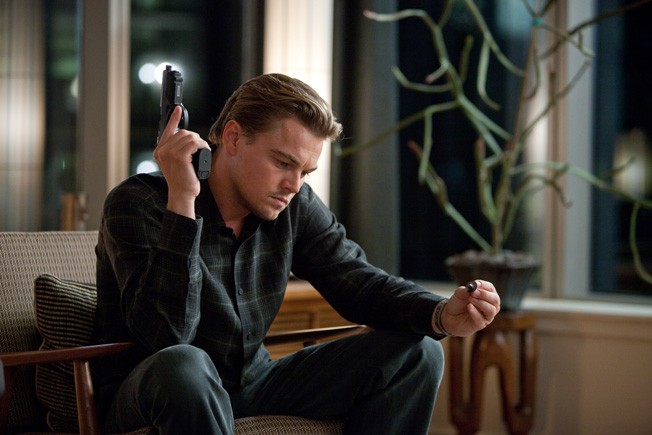
For me, the film's central dramatic struggle was to keep hold of reality. For the most part, this means that our characters want to know if they are in the real world or are in a dreaming state. Although it also stands in for the central idea of inception; are these my real thoughts after all? It provides for great tension in the film, as it's a nagging problem for Cobb (Leonardo DiCaprio) as we see him constantly spinning his top to remind himself of reality.

Interestingly, there are two people in the film who truly do lose sight of what 'reality' is; Cobb's wife Mal and a group of 'shared dreamers' in a Mombasa backroom. In the case of Mal, Cobb informs us that, "...she locked away a secret, deep inside herself, something she once knew to be true... but chose to forget." In this case, she locked away and forgot her totem (the same top that Cobb uses), symbolizing that she has chosen to lose track of reality; accepting the dream world as her new reality. In the Mombasa backroom, we are told that this group of 'shared dreamers' meets everyday for several hours of dreaming (equaling many more hours in the dream world). The overseer then states, "They come to be woken up. The dream is their reality now. Who are you to say otherwise?"

Upon first watch, I felt the Mombasa scene was more or less a throw away sequence intended to show how some have become addicted to the dreaming. In retrospect, it provides a sharp contrast and a strong argument against what would become the major theme of the film. With all that 'shared dreaming' has to offer; the extended lifetime, the creativity, and the experiences; it's not reality and therefore inferior, a shade of our real world.

In Cobb's final confrontation with his wife Mal he must confront the decision of spending a practical eternity with her in their own world ("I miss you more than I can bear, but we had our time together. I have to let you go") and desiring to return to the real world and see his children*. Ultimately, Cobb declares to Mal, "Look at you. You're just a shade, a shade of my real wife. How could I capture all your beauty, your complexity, your perfection, your imperfection, in a dream? Yes, you're the best that I can do. But, I'm sorry, you're just not good enough."

I particularly like this idea that we deserve better than our dreams, we deserve reality. Risk, adventure, loss, tragedy, grief and imperfection are central to the human experience and isn't worth losing even if it means gaining immortality or 'togetherness'. While enlightening, it's not exactly a groundbreaking insight into life and one could possible even argue (as Mal and the Mombasa shared dreamers do) that Cobb is wrong and reality isn't all its cracked up to be. This is where I think the film really shines in that Cobb comes to this insight and conclusion honestly and naturally. It is faith that is required in order to understand Cobb's arrival to truth. This is where Nolan's humanity shines through and the cold precision is put to bed.

When Saito offers Cobb the possibility of clearing his name in return for inception, Cobb asks what assurances Saito could give. The reply is "none" that he would have to take him on good faith. Saito offers, "Dare you take a leap of faith? Or become an old man, filled with regret, waiting to die alone." Cobb decides to take the job, hoping the reality of seeing his children again would be better than becoming old and filled with regret. Similarly, when Cobb and Saito (now an old man) both meet again in limbo, a remarkable exchange takes place,

Saito: You remind me of someone... a man I met in a half-remembered dream. He was possessed of some radical notions.

Cobb: I came here to tell you... something.
[pause]
Cobb: Something that... you once knew to be true.
Saito: [remembering] Impossible...

Cobb and Saito have a vague remembrance that their current world is not reality, that reality was awaiting them, but they would both be required to die for it. There are clues, evidence (the spinning top, vague remembrances) and doubts about what is real and not (and ultimately the film still leaves room for doubt), but it will require faith in order for them to meet reality. It's not a math problem or a scientific experiment, but a journey.

While I think this is a correct interpretation of Inception's central theme, it has reverberated with me so strongly because of its ability to speak to my religious beliefs. As a Christian I believe that there are clues and evidence within our world that points to a creator God and an entire spiritual realm of reality. However, there are still doubts (Man is there doubts!) This isn't a math problem or science experiment, but a journey; one that requires faith. Incredibly, like Cobb and Saito who must give up their world of limbo, (where they have full power and control) and literally die; Christ says that we must also give up our world of power and control and die to ourselves in order find the real truth of our world. I find this incredibly enriching.

Am I saying that Inception is a Christian film? Certainly not. Both seek to speak to the truths of our existence, and in that way they are indeed similar. The film's acknowledgment that there are not only clues to ultimate reality, but also doubt about our reality, makes it surprisingly relatable (especially in our postmodern context). Even more so, the films embracement of the necessity of faith in order to experience the realities of life, makes it thoroughly human. In that sense, I think it speaks not just to Christians, but to anyone who has experienced life. Appropriately there is room to doubt for those who look for it (does that top keep spinning?), but Cobb's and Inception's embracement of the real and rejection of the dream (making it very Matrix-esque), symbolized by Cobb's journey to his children, is a full on emotion and humanity.

In fact, taken to its conclusion, the film almost insults the viewer. Like the shared dreamers of Mombasa, we viewers connect and share this dream with Nolan, projecting our own subconscious into the film. In our ever increasing media society where we consume films, television shows, and video games for hours a day, are we not like those living their lives away in a dream world? To that, the film's exhortation to reject the dream and embrace the fullness that reality has to offer is both an affront and an encouragement to its viewer. Of course it's the best type of affront, a warning and a clarion call, that reality waits beyond the doors of the theatre. This to me is the humanity of the film, and it comprises the true contribution that Inception has to offer.


*This also rings true with Cobb's notion that positive emotion always seems to trump negative emotion. Ultimately, the positive emotion of reuniting with his real children has trumped the negative emotion of the guilt he feels for conceiving the idea that would lead to Mal's death.

Friday, July 16, 2010

Inception Review

Overall Grade: A

"We create the world of a dream. We bring a subject into that dream and they fill it with their secrets." Cobb (Leonardo DiCaprio) explains this key plot point early in the film to newcomer Ariadne (Ellen Page). It's an important description of the dream heists that Inception is based upon, but it's also a good basis for understanding how the film as a whole works, how the director/writer Christopher Nolan put it together, and even on a deeper level, how an audience interacts with a film. While Inception is about as intelligent, entertaining, and imaginative as summer blockbuster's get, its lasting contribution isn't really what someone is going to get out of it, but what someone is willing to put into it. However I think I may be getting ahead of myself here, so let me begin on the surface level.

On the surface, Inception is a marvelously written heist film with a science fiction twist. Instead of stealing money, or artwork, the idea here is to extract corporate ideas within the vault of someone's subconscious. If that sounds terribly un-cinematic, it's not. This isn't a 2 hour art-house drama between an estranged and damaged widower and her psychiatrist taking place in just one shot. Nolan, his art director, and cinematographer transform and translate what could essentially be just conceptual ideas into a true visual feast. We are talking exploding realities, cities turning in on themselves, worlds crumbling, and gravity defying fights; is that visual enough for you? Two twists take this basic plotline and begin the real story that drives Inception.


First, a corporate industrialist Saito (played superbly by Ken Watanabe) wants to hire Cobb and his team not to extract an idea from a rival CEO, but instead to implant an idea. It's a risky venture that would require Cobb and his team to go several layers into the subconscious, risking their lives in the process. Cobb is at first not willing to take the risk, until the second twist comes in, Saito offers Cobb as his reward, the chance to return to the United States and see his children. Essentially offering Cobb the vaunted one last job to make things right. Cobb takes it and sees it as his chance to "come home". Why he's exiled from the US, and why he's estranged from his wife and children are answers the film will later unfold.

These two threads (the act of inception and the emotional journey home to his wife and children) really drive the action and emotion of the entire film. From here we get to see Cobb assemble his team, hatch their plan, and then, for the last half of the film, execute the inception itself. Enough about the plot and surface level stuff, how does it all come together and work as a film?

If it seems I've focused a lot on the plot, it's because this film is packed with it. In fact, it feels at times that the film is probably a little too packed with it. The world, ideas, and storyline that Nolan has created is truly incredible, creative, and intriguing. I have no doubt that the ideas and concepts Nolan explores here will spark a slew of like-minded films within the next few years. However, the world that Nolan creates is so intricate and clever, the forward momentum of plot and action so unstoppable, that the performances and drama of the film struggle to become it's equal.

From the very get go, the film hits the ground and keeps moving from one moment, one place, one idea to the next. It's a torrid pace of storytelling that can leave some behind, but more than likely, serves to wrap one up into the film and its ultimate trajectory. This is a film that starts out running, and picks up momentum as it hurls forward and digs deeper. However, the deeper it goes intellectually, the more distant I felt emotionally.

For instance, while the audience is supposed to care deeply for Cobb's emotional 'Journey Home' and reconciliation with his children and wife, the movie never takes the time to bond us with this family. While the film revels in slowly revealing the hidden secrets behind his family, it never revels in revealing to us what was so special about 'home' to begin with. It unfortunately turns his family into one-dimensional pieces of a puzzle that slowly reveals itself and solves itself, as long as you just stick along for the ride.

It's not as if Nolan doesn't spend time focusing on these relationships, there is actually a decent amount of screen time devoted to it, it's that it just doesn't work in the way that everything else does in this movie. Incredible visuals? In spades. Seamless art direction? Check. Ominous and pounding score with accompanying sound design? Best of the summer. Clever and brutal action? Will be remembered for years. Powerful and three dimensional emotional archs? Sort of.

Perhaps though, this isn't a problem of Nolan's making. As I mentioned in the opening, our characters in the film create a dream world and then allow subjects into the dream that populate the dreams with their secrets. What's onscreen is the film and world that Nolan has created; the themes and emotion of the film reflect the vision and mind (secrets) of Nolan himself. However, in talking with a few people about the film, I found that they had a connection with Cobb's family that I didn't. As I expressed my disappointment in the emotional arch, they were surprised because they felt it worked perfectly. Perhaps, the story is a bit more complex than I've given it credit. Perhaps my disappointment and disconnection reflects less Nolan and more of me?

As I began to think along that line of thought, I find it incredibly rich that the central idea of the film (that of building a dream and allowing others to fill it) are essentially what happens when an audience interacts with a film. Each film has all the same elements of a dream world created and sustained by architects (writers), point men (directors), and forgers (actors). Like dreams, movies just begin suddenly and move from scene to scene, and when they bend reality in a way that's unreal we react accordingly. What makes this idea interesting is that the audience then becomes the subject, and we fill these films, stories, and worlds with our secrets and our projections.

** For an interesting read using this line of thought, read below the end of the review. Warning, it contains some spoilers

In this way, Nolan has left several things open to the viewer, and really allows the viewer to fill in accordingly. In this regard, the film is a smashing success and works not only as entertainment, but as a journey of adventure, interaction and catharsis. Without giving away the ending, I will say that it's most not an artistic cop out, but is seated firmly within the ideas and intentions I've mentioned above.

While it isn't a perfect film, Inception is a wonderfully crafted, and intricately plotted film that allows itself to be filled with the themes and idiosyncrasies of not only it's architect and writer, but us the viewer as well. In fact, should we not have expected as much from a film entitled "Inception"? For that reason, this film is able to rise above its few faults, rise above just being an entertaining film, and become a real piece of art. Like the best films, I think it allows each new viewer not just to enjoy it as it is, but to make it their own. Learning not just about Nolan's world and his secrets, but about our own in the process.


**Continued from above: SPOILERS

Continuing from the idea I've outlined above that this film functions in the same way that audiences interact with films. When can say this interpretation actually is manifested onscreen in the character of Saito (Ken Watanabe') as the 'Tourist'. Why does he tag along as part of the team? He say's it's to ensure that Cobb goes through with it. Essentially, I would argue that Saito is the stand-in for the audience here. The film is called "Inception". This is what we want to see Cobb and his team do, along with all the action and drama that comes with it. Saito (the audience) is the one that enrolls him in this action. In fact, isn't the idea of planting ideas into someone's mind, one of the reasons we go to the movies at all? To be inspired by ideas and to let them influence us?

Saito then comes along as 'The Tourist' as the stand-in, getting to not only watch the team in action, but also take part in the whole ordeal. In fact, our main character Cobb can't leave the film until he rescues us and brings as back into the world after the act of inception occurs. It's not until this happens that Cobb is allowed, by an act of Saito, to return and find his happy ever after. Cobb isn't allowed his happy ending, until he's accomplished what we want him to do, overcome his problems (which I would argue is the idea we want to have implanted in us), and get us out in the process.

Is it foolproof? No, but I think it's got a lot to say. Just a cursory reading of the IMDB boards shows there are several other interesting ideas and readings out there as well. This is just one that speaks quite a bit of insight to me.

Friday, July 2, 2010

Movie Review: The Last Airbender

Overall Grade: C-

What shocks the most about M. Night Shyamalan's The Last Airbender is not that it's bad, (children's fantasy series don't always deliver on screen, Eragon anyone?) but that it's an absolute incompetent mess. Extending grace, I would first try to understand if the source material was flawed or presented an unadaptable challenge. On that note, it seems clear that the basic concepts of the source material are the few creative bright spots of the film. It's when Shyamalan overlays his adapted screenplay and his confused directing that the concepts fizzle out under overly expository dialogue, barely sketched out characters, and half-baked themes and arcs.

Still, M. Night can walk away with a few successes on this film. For the most part, the art direction, costume design, and visual effects work well to create the world this bumbling story inhabits. They are some great landscape shots and a clear idea (artistically) what the different nations (fire, water, wind, and earth) look like and feel like. Add to that a couple good shots of action when M. Night allows his camera to focus for a longer period of time (a camera move he would use for his most dramatic moments). Dev Patel walks away with perhaps the only three dimensional character (albeit slightly overplayed at times), and in my opinion is the only character to emotionally root for in this film. That's a problem.

Overall, Shyamalan seems to get bogged down in trying to explain this whole bending universe solely through expository dialogue. It shocks me that someone who was able to keep such subtlety and restraint in The Sixth Sense and Unbreakable couldn't find out how to let the story tell itself, Robert McKee would not like this film. So many fans hoped that coming upon previously written material would give Shyamalan the creative spark he needed to return to his former self; those hopes are now dashed. As bad as The Happening was, at the least it was the failure of an artist taking risks with original material. What makes The Last Airbender a bit harder to stomach, is that there is no risk here, only incompetence on display.

The only noticeable difference between a Shyamalan directed Last Airbender and if Uwe Boll (In the Name of the King, Alone in the Dark) had directed it, would be the name in the credits. I've tried to keep up hope with Shyamalan, but he seems to only be going downhill (which is saying something after The Happening). There's always a possibility for redemption, but for now, the most accurate way to recommend Shyamalan's work in The Last Airbender is, "Abandon hope, all ye who enter here"

Monday, May 17, 2010

Iron Man 2 & Robin Hood: Video Review

Saturday, April 10, 2010

How to Train Your Dragon: Video Review

Clash of the Titans: Video Review

Monday, March 8, 2010

2 Minute Video Review: Alice in Wonderland


Overall Grade: C

Feel free to comment with your own thoughts

Sunday, December 27, 2009

Up in the Air Review - Sort of

Overall Grade: B

Due to a complete lack of time (and subsequent sleep) I'm not able to do a traditional review of the film. So, to fill in I thought I'd just give you the bullet points of what my review would've been anyways. Feel free to comment.

- George Clooney gives a great and nuanced performance, even if it could be said that he is just 'playing' George Clooney. Vera Farmiga and Anna Kendrick give great performances as well.

- The film is very enjoyable to watch and plays out very well. It looks good and is superbly edited.

- I've always personally enjoyed flying and 'hotel' culture. It is a bit fun as a vicarious fantasy to live out what that would be like.

- There is a decent message about our connections with others being the best parts of our lives, in the end meaning the most to us.

- There is also a nasty and cruel existential listless to the universe of Up in the Air that undercuts the 'sentimental' family and spouse message mentioned earlier.

- The existential underpinnings of the film reveal the film's ultimate message, life is limbo. Our job (like Clooney's in firing people) is to make limbo livable. To do so, we should be alone, together, or whatever gets us by.

- The desire for an honest existentialism should be commended though in that it's careful to not over-romantice Clooney's solitude or Clooney's future in marriage, but show that both directions will hurt you and let you down. There's ultimately no point, no purpose, and no destination. Like Clooney's 'miles', our lives are just a meaningless in the end.

- Most film critics COMPLETELY miss this undercurrent of nasty hopelessness, many claiming it's a heartwarming tale full of humanity (which comprises a small part of it).

- The film has practically nothing to offer as a critique of our economic times, most critics have no idea what they are saying when they claim this.

- George Clooney looks pimp in a suit.

- Despite the nasty existentialistic worldview, I still enjoyed the movie and was able to glean some interesting insights.

- It's a worth a watch, if not for George Clooney being George Clooney...and looking pimp in a suit.

Saturday, December 26, 2009

Sherlock Holmes Review

Overall Grade: B+

The most entertaining blockbuster of the year arrives in theatres five days before the year ends (Somewhat salvaging an otherwise dismal year for mainstream films). Modernized and re-envisioned, I was suspect of this film from the first few pictures they released of it. To my surprise, this is a muscular retelling of Holmes that is part Scooby Doo (I’ll explain), part The Prestige, and part Lethal Weapon, all filtered through the masculine vision of Guy Ritchie. Despite falling into a couple setbacks, Sherlock Holmes attains that rare status for a blockbuster film; pleasure for the mind, pleasure for the eyes, and no guilt the morning after.

The center of the film is the incredible performance of Robert Downey Jr. as Sherlock Holmes. Downey gives the most enjoyable and nuanced performance of a blockbuster hero since Depps’ Captain Jack Sparrow first waded upon shore. Forget Iron Man’s Tony Stark, Holmes is the jerk to love and root for. Despite his incredible skill and wit, Holmes is a fighter, gambler, and depressed addict that is generally unlikable when he’s not ‘on the case’. So what makes him enjoyable?

He is enjoyable here because the film makes no apologies for his character and isn’t afraid at showing the loneliness that stems from it. See a scene in which Holmes deduces some rather hurtful information about Watson’s fiancé, hurting her feelings and causing her to leave. A lesser film would’ve made her the object of laughter, a stuck up prude exposed by our hero. Here she’s appropriately the victim and we see the ‘warts and all’ side of Holmes. As entertaining as his deducing and fighting is, I find myself even more interested in how Holmes develops and overcomes his obvious flaws.

Downey is matched by Jude Law as Watson. Like Lethal Weapons’ Murtaugh and Riggs, both Holmes and Watson are up for a fight. Just like Glover’s Murtaugh, Law’s Watson provides the balancing effect with a call for Holmes to settle in and civilize. They are a fun match and like Lethal Weapon, the script really allows them to play off one another and run wild in their respective environments.

That environment is an interesting amalgam of a Scooby Doo (“that wasn’t a ghost, just a projector”) storyline set in the grimy London of The Prestige. Pairing a ‘supernatural vs. natural’ storyline with coming of industrial age London feels inspired within a Sherlock Holmes film that is all about reason, logic, and deduction. Like The Prestige, the pairings ask inherent questions about how a world of religion, mystery and the supernatural will exist in a world of widening scientific explanation, logic, and mechanization. It’s there to glean, but Sherlock Holmes unfortunately doesn’t delve too deep in that pool, whereas The Prestige gleans great wisdom from the tragic intersections of magic, the supernatural, science, and man's nature.

Here of course, Holmes’ deduction is infallible and victorious, but I wonder if the sequels will explore the limits to such an approach. Over reliance on deductions made about little details, while they make for fun banter and revelations, are not fool proof and require much faith in its methods. One last note I’d like to make about the science vs. faith/religion subtext in the film, but it will involve some details you might not want to read. If so, just skip the next paragraph two paragraphs.

SPOILER ALERT

A note should be made here that it’s possible for people to read an anti-religious and anti-Christian bent to this film. In fact, by the end of the film, Holmes has explained away the supernatural resurrection of a religious figure that then makes appearances to his followers (who drink a cup to pledge their allegiance) and to outsiders, doing supernatural ‘miracles’. This figure and his followers were then going to use this supernatural power to strike fear in to the hearts of the masses to control them. A cynic, or someone with half a brain, can make the connection to Jesus Christ and the claims made about his followers.

While it’s possible the writers intended it this way, it doesn’t alarm me, nor bother me in the least, and I hope it doesn’t for you. While it’s possibly a more direct and damaging attack on religion than any messages about ‘humans’ found in Avatar; it’s also infinitely more intelligent and honest. There are no one-sided caricatured Christians here nor are there any obvious and on the nose quotes made to draw direct parallels with Jesus or religious leaders (“fight terror with terror” and “shock and awe” are achingly bad from Avatar). In fact, when asked by Watson early in the film that Lord Blackwood’s resurrection could have a supernatural explanation, Holmes responds that it is possible; just that they shouldn’t buy it until all the facts have been discovered. What a refreshing viewpoint for a major Hollywood film.

END SPOILERS

Also refreshing is that we are allowed to watch a blockbuster without having to filter it through the eyes of a ‘Shia Lebouf’ like teenager. Essentially, these are adults taking on adult tasks in an adult world. The banter is primarily intelligent, the action brutal (Ritchie shoots ‘fights’ in much the same fashion as he did in Snatch), and the storyline rich in subtext. That’s not to say it didn’t have its faults. I’ll say a small word about those now.

In an otherwise perfect cast, Rachel McAdams is ill-placed and ill developed. Besides moving a plot forward and adding some weakness to Holmes himself (two admittedly important jobs), McAdams fizzles next to Downey and Law. Saddled with playing American (New Jersey to boot!), her accent and role just fall flat. Sherlock Holmes also suffers from a predictable and routine middle section with Holmes exploring and then subsequently being rescued by a ‘just behind’ police force. Included is a ‘heroine in distress’ action sequence in a slaughterhouse that comes straight out of a 'what might’ve been' version of this film. Thankfully, that version is unseen the rest of the film.

Sherlock Holmes is a solid blockbuster that falters a bit in the middle, but is nonetheless is as refreshing and entertaining as anything put out by the major studios all year. When was the last time that you could say a Hollywood blockbuster was seemingly made for adults with adults themes and stars, entertains in spades, and yet is suitable for almost the whole family? The true test about the success of this film and it's re-envisioned world is whether or not I’d want to see anymore of it. To that question I answer with an easy "Yes". A great foundation has been laid here, and I’m excited to see what adversaries and mysteries lay in store next for these characters. As Holmes himself might say, “The game is afoot”.

Friday, June 26, 2009

56. Casino Royale


Casino Royale (2006)
Directed by Martin Campbell


Casino Royale not only rebooted the Bond series in 2006, but saved it from irrelevancy in a post Bourne action world. With a fresh reboot came changes; a fresh face in the Bond role (from Pierce Brosnan to Daniel Craig), an old face to the director’s chair (Martin Campbell directed Goldeneye), and some pedigree to the script crew (Oscar winner Paul Haggis helped to write). Tinkering with the Bond formula and adapting it to new times could’ve easily led to disaster just like Bryan Singer’s Superman Returns from the same year. Fortunately for Bond fans, Casino Royale is a great success and for my money, it’s the best Bond film of them all.

The seeds for a reboot were sown in 2002 when Die Another Day, the most recent Bond film, was released to good box office returns but strong negative reaction. Besides the negative reception, there began a shift in action styles that can be traced to the 2002 release of The Bourne Identity. Although Identity wasn’t initially received as influential (like The Matrix was within months of its release), the quick and practical style of action was adopted gradually over the years until it became the standard for serious action films. Identity’s follow-up, 2004’s Bourne Supremacy, cemented Bourne’s influence on action films.

By the time the Bond producers were able to move forward with another film, the tastes of audiences, which had been changing since 2002, had become permanent and a reboot was necessary. The change in tone is noticeable right from the beginning. Where Die Another Day opened with a grandiose hovercraft chase in North Korea, Casino Royale opens with a stark black and white sequence where our new Bond earns his “007” status through two brutal murders. It’s brilliant sequence that leads directly into a superlative chase through a construction site.

Breathlessly shot with an incredible eye for coherence, it’s an awesome mixture of the brute and practical action of the Bourne series, but with the grandiose set pieces of the Bond series. Throw in a helping of parkour (urban free running) and Bond is no longer a relic of a bygone era, but he’s current and he’s setting new standards. From here the action and pace barely let up as Bond whisks away to Miami for another intense and suspenseful chase scene. In fact, for nearly the first hour or so, the movie never lets up; its one of the most enjoyable and brutal hours in all of cinema.

After Miami, Casino Royale settles in for its second act, spent mostly in a beautiful hotel playing poker and it’s here that the movie puts plot and character development into high gear. Vesper Lind, played by a gorgeous Eva Green, is a great match for Bond and their relationship, while still retaining the Bond jokiness, is quite intelligent and layered. How the filmmakers approached Bond and Vesper’s relationship is typical of how they handled all the other Bond elements as well.

The usual formula is retained, but they are grounded in a reasonable environment and treated as realistic. Thus, we get a villain who has blood come from his tear ducts, but is still every bit as believable as a villain in a typical crime drama. Bonds' puns and one-liners are present, but they are kept to a minimum and generally feel like a natural part of the scene.

Probably the biggest and best change to the series was an actual desire to examine Bond as a character. Casino Royale examines Bond in much in the same way that Batman Begins examines the literal as well as the thematic and motivational beginnings of the Batman character. We witness Bond gain his ‘007’ status, as well as discover how he develops his cold personality towards women. It’s not until the very end of the film that we have witnessed a fully developed ‘James Bond’, and it’s not until then that the audience is allowed the catch phrase, “Bond. James Bond”. Excellent.

I do have a few nitpicks about the film. The pacing of the film is a major problem for me. While the first hour really is excellent, it also creates unevenness to the whole movie. For after watching an entire hour of action, we don't get another real action set piece until the final scene of the film, almost a whole hour and fifteen minutes later. The second gripe is that the action finale is nowhere near as exciting or accomplished as anything seen in the first act and it makes it a little anti-climactic for me. Outside of that, Casino Royale is an action masterpiece and an essential addition to my collection.
P.S. The promotional material for this film is some of my favorite. Below is the excellent teaser trailer and "You Know My Name" is my all-time favorite Bond song and opening sequence as well


Tuesday, June 16, 2009

The Hangover Review

Overall Grade: C-

The Hangover is not only one of the most pedestrian sex comedies I've seen in a while, but it's also the most overrated. The Hangover takes an interesting premise and squanders it with cardboard characters doing immoral actions and ultimately learning nothing from anything while getting away with everything. As the men learn of their escapades their reaction is laughter and incredulity, its never remorse or reflection. Don't be fooled, The Hangover is no Wedding Crashers nor is it even Knocked Up, this film could've starred Jerry O'Connell and gone straight to DVD in college towns.

Of course, the first response will be, "Kyle, relax, it's just a comedy". It is the very fact that it is all played just for laughs that makes the film so offensive to me. These men purposefully go to Vegas for a wild night of possible debauchery and then awake in the morning to "shockingly" find that they actually had a night of debauchery. This isn't a comedy of errors, it isn't one coincidence rolling into another, nor is it wrong place-wrong time, these are events that happened at the (mostly) free will of inebriated men. Where is the comedy in that? Not to mention that while the guys have good onscreen chemistry, there isn't a truly likeable character in the bunch. One of the characters isn't allowed near schools (a line played off for a joke), and one character (playing an elementary teacher, husband, and father) is the true instigator of the evening.

The Hangover then has the audacity to include only crude, annoying, or ignorant females. One possible wife for one of our leads is such a cartoonish and overblown conservative character that Sarah Palin would make fun of her. Adding insult to injury, the end credits feature the most lewd and crude footage of the entire film, including fully uncensored sexual acts that an Apatow film would blush at. That the film wants to me laugh at drugged, inebriated men, cheating on their wives and girlfriends with strippers, hookers, and apparently random women in elevators is offensive to me, and I would hope it would offend most people. There is no redeeming moral, not even a small and insignificant arch that the film could be proud of.

A lot of times it takes one person in the crowd to stand up and question something before others realize the foolishness which they have embraced. Its one thing to laugh at some of the sequences and images (I'm not calling your gut reactions wrong here), but this celebration of deviant behavior should be called for what it is. If what I have described is something that you feel completely comfortable with, then this is a film that is right up your alley. However, for everyone else who laughed at the premise in the trailer and heard how popular the film was, I caution you to stay away.

Wednesday, March 18, 2009

96. Kung Fu Panda


Kung Fu Panda (2008)
Directed by Mark Osborne and John Stevenson

I think that Kung Fu Panda is one of the more overlooked animated films of all-time and I’m one of the few who thought it should’ve beaten Wall*E for the Animated Feature Oscar of 2008. Shakespeare this film isn’t; but it’s a solid, efficient, and perfect animated film that is an absolute delight to watch.

From the over-stylized opening sequence (that had me laughing from the get-go) to the artful credit sequence, Kung Fu Panda is a tightly wound and plotted work. I applaud the decision to go simple and innocent with the tone of the film. I particularly enjoyed the idyllic settings the animators painted for this universe; the simple landscapes and town folk (mostly made of ducks and bunnies) would feel at home in a children’s cartoon on Disney channel.


Great attention is also paid to the action sequences. It’s clear that the animators and writers have researched and been influenced by past Kung Fu film, because the fights pay homage to all the necessary trademarks of kung fu while remaining refreshingly contemporary as well as exciting. Three sequences are standout action set pieces; Tai Lueng’s prison breakout, Po’s Dumpling Training, and the final showdown between Tai Lueng, Shifu, and Po.

As much as I enjoy the action in this film, the biggest reason I wouldn’t want to live without this film is because of the characters. I’ve had the opportunity to watch this film several times now and I’ve grown fond of the ever-positive but physically challenged Po (voiced excellently by Jack Black), as well as the restless, conflicted, but basically good Shifu (also voiced excellently by Dustin Hoffman).


It’s in the interaction between these two characters that the film really finds its soul. These are two living breathing characters that have their own weaknesses and strengths, and for a simple and innocent family film, it’s refreshing to see such conflicted yet triumphant characters.

While the main message of the film (if we believe that we can be special then we will be special) is a good and worthy message, I really connect with the relationship between Po and Shifu. That they ultimately find redemption and success when they admit their faults and work together is a simple delight that few films have to offer. Honestly, when was the last time a film delivered an honest, innocent, and simply delightful payoff? You know this film works when it can successfully end with the its two central characters just relaxing together on the floor. For that, and all else that goes with it, Kung Fu Panda is a film I can’t live without.

Other Essentials: The moment when Po tries to take some broken concrete as a souvenir, the wushu finger hold, the amazing intro for the turtle Master Oogway

Here is a link to my original review of Kung Fu Panda from June 2008


97. The Cocoanuts


The Cocoanuts (1929)
Directed by Robert Florey and Joseph Santley


The Cocoanuts marks a lot of firsts on my Top 100. It’s the first Marx Brothers film to make the list (and this is the first of FOUR, that’s right, FOUR, can you guess the other three?). It’s also the first time a Marx Brothers’ film has made it into any of my top 100 lists. The Cocoanuts and the Marx Brothers films in particular are the first beneficiaries of changing to the “Film’s I Can’t Live Without” system.

In years past, I was hesitant to rank any of the Marx Brothers films in a “Best” list, because the films are full of faults, some a problem of writing, and some a product of being in the infant stages of film (it came out in 1929 for heaven's sake). The plots are basically non-existent, the direction, sound and editing are all sub-par. In fact, the pace of the films at times will screech to a halt for random musical interludes. The Cocoanuts in particular suffers from some very dated musical numbers (musical numbers were common to all films of this period), that as a modern film viewer, I have a hard time looking past, without hitting the fast forward button. Couple this with all the technical problems expected of the early sound films (a camera that never moves, spotty soundtracks), and how could anyone place these films on a “Best” list?


Fortunately in switching to the new format of, “Films I Can’t Live Without”, I opened the door for all types of genre films to find a place, even if they have severe faults. Although the Marx Brothers can be labeled in the genre of comedy, they really inhabit their own sub-genre of comedy all unto themselves and The Cocoanuts is one of the best examples of their particular brand.

While it isn’t as polished as some of their later work, some of my favorite Marx Brother’s routines of all-time are in this film. There is an excellent Harpo pick pocket sequence that must be rewound and played several times to appreciate fully (as much of their best work requires), as well as the infamous “Why a Duck” routine between Chico and Groucho, where the puns and entendres are flying a mile a minute. I think the “Why a Duck” routine is one of the funniest comedy bits ever produced and it’s truly the standout piece of the film. There is also some great stuff at an auction and at a later wedding engagement ceremony (Harpo gets some real moments to shine here).

Filled with puns, double entendre, non-sequiturs, and absurd antics, The Cocoanuts is a film I would not want to live without. For those not familiar with The Marx Brothers comedies, I suggest that you give them a few chances to get used to. It’s not easy to pick up on all the humor right away (I suggest subtitles, but you should always be watching with subtitles anyways right?), as it took me several viewings to really begin to enjoy the characters and situations that Groucho, Chico, and Harpo have crafted here (Charlie Chaplin comedies can be much the same way).

For your first Marx Brothers comedy, don’t start with The Cocoanuts, I suggest you choose the highest ranked Marx comedy on my list (which will be revealed in time). Whatever you do, just give them a chance. Hopefully, you’ll enjoy them so much, you won’t be able to live without them too.


Enjoy this small clip taken from the film. Its not the best sequence they have written (not even the best in the film), but it gives you an introduction to them. Be on the lookout for one of my favorite lines, "Don't throw that, thats only for long distances"

Tuesday, March 10, 2009

Watchmen Review

Overall Grade: C+

Along with being the first “Event” film of the year, Watchmen is the first film that I have seen all year that seems curiously unaware of what it really wants to be. Taken, Paul Blart, Coraline, The International, and even Push, all knew exactly what they were and weren’t and delivered a movie accordingly. Much like last year’s Wall*E and Hancock, Watchmen attempts to be more than one thing, in fact it tries out several genres, numerous tones, and attempts to appeal to nearly all crowds. Like in the worst politicians, this desire to appeal to everyone usually leads to a weakened effort without any singular focus, and Watchmen suffers the same fate.

Watchmen is a generally faithful cinematic adaptation of the graphic novel of the same name, and therein lies its main problem. The original graphic novel is a sprawling canvas with a large cast of characters (all with the requisite back story), multiple points of view, several side stories, and a primarily cerebral payoff. This absolutely works for the graphic novel, but translating it to the screen is difficult, because it requires Translation, something for which the director (Zack Snyder) and writers did not seem willing to do. I would think that a director like Alfonso Cuaron, someone who is willing to translate literature into cinema (look at Prisoner of Azkaban and Children of Men), would have been better suited for this. What you may ask did they get right?

The first fifteen minutes of Watchmen featuring the murder of the comedian and the opening credits (with great use of Bob Dylan’s “The Times Are Changing”) are incredible and rival anything else I have seen so far this year. As an introduction to the central plotline and to the Watchmen universe, these opening fifteen minutes are the most creative, informative, and efficient scenes of the entire film. Along with the fidelity to the source material of Watchmen, came fidelity to the look of the graphic novel, and this is where Watchmen truly shines. The art department and camera crews have perfectly captured the look and texture of the novel, and outside of the first fifteen minutes (and Jackie Earl Haley’s performance of Rorschach), the only unconditional successes of the film.

Thankfully, Zach Snyder did cut many of the side stories found in the novel (the paper vendor and the Black Freighter storylines seem perfectly made for DVD extras), however he failed to find any adequate answer for telling the back stories of our main characters without losing the momentum begun in those opening fifteen minutes. In fact, investigating the murder of the comedian (which should have been the central focus of the film, perhaps with Rorschach as the sole point of view) and the present time storyline merely felt like necessary evils in order to get to the momentum halting back story. This is where creative translation would’ve helped this film truly become a compelling and involving story, rather than a checklist of needed sequences.


Which brings me to the biggest problem of the film, the themes. The central theme and purpose of the story is in demythologizing our Watchmen superheroes. In your typical superhero story, its assumed that the superhero is not only there to do the right thing, but that he ultimately knows what the “right” thing to do is and has the power to make it happen. They operate as the saviors of mankind. Our Watchmen hero’s operate as the destroyers of mankind.

In the world of the Watchmen, everyone does what is right in their own eyes, even the superheroes. The Watchmen are just as miserable, evil, corrupt, and wrong minded as the people they are trying to save, just with some special powers. In fact, the Watchmen don’t even agree as to what is “right” and what “justice” really is. It’s a worthy message that is unfortunately undercut by one of the few translation decisions Snyder decides to curse Watchmen with. Why create a story that attempts to demythologize superheroes if Snyder is going to create an action style that immediately works against it? Instead of portraying fallible heroes going too far in violence, getting bruised, and seen in silly costumes, we are treated to superheroes that are shown in a “cool” light, striking poses, beating up bad guys in stylish and amazing fashion complete with incredible slo-motion camera work. I shouldn’t cheer with excitement when one of our heroes causes prison riots, kills and maims several inmates, and is ultimately busted out in an action scene that would be better suited to Arnold Schwarzenegger.

By trying to please the action and superhero crowd with whiz bang action scenes, Snyder undoes the main reason for the film in the first place. There are more thematic problems as well, including the attempt to posit objective values in a completely nihilistic world. Doctor Manhattan’s struggle to care for human beings in a nihilistic world is cheaply cut off by an illogical argument the film makes about unlikely events and miracles. If your gonna have a nihilistic world, then embrace it, but don’t try and wrap a nice objective moral on the film by the end. Again, one has to think that Snyder wanted the film to appeal beyond its pessimistic and cynical themes, and so he pulls the same act that Spielberg pulled in War of the Worlds (thankfully Spielberg had the guts to end Munich with the moral confusion and frustration it deserved).

I could go on about the films second and third act problems, but I honestly don’t want to pick on it. If you’ve read this far into the review then I think you are getting the idea of how I feel about the film. As I said at the beginning, the desire to appeal to everyone usually leads to a weakened effort without any singular focus. Watchmen is like a politician who tells you that all politicians are corrupt, given to mistakes, and are prone to ruin everything they touch, and he’s just the politician to turn it around; inherent contradiction. I didn’t vote for it in November and it doesn’t get my vote now.

Tuesday, January 27, 2009

The Wrestler Review

Overall Grade: B

I initially wasn’t going to write a review for this film, but considering the popular demand for it, I decided to put some pen to paper (or in this case, some words to the web).

I would like to tell you that The Wrestler is an epic drama, chronicling the rise and fall a professional wrestler, but that really isn’t the intention of the film. The Wrestler is a modest film, following Randy “The Ram” for about a year of his life, giving us a portrait of a man at a crossroads.

Randy's wrestling career is winding down (as is his crippled body), and he is confronted with loneliness and an inability to get a decent job anywhere else. Complicating matters are two relationships that Randy pursues; one with his estranged daughter, and one with a local stripper played by Marisa Tomei (with a heart of gold). While his relationship with his daughter was a little bit of a dramatic dead end for me (as well as ridiculously sentimental in parts), his burgeoning relationship with Tomei does provide for some interesting insight.

Both characters are employed in professions of make believe and performance, nicely paralleled by spending significant time showing both characters dressing up, walking to the stage, and coming through the curtain to their “stage”. Even though Tomei’s profession isn’t exactly the most noble or constructive, she makes certain to draw the line between work and real life, where she supports a child and won’t date customers from the club. For “The Ram”, the line isn’t so obvious. The literal self-destruction of his profession spills over into his personal life leading him to certain actions that can only be deemed…self-destructive (like taking up a young fan’s offer to do lines of coke).

I liked the contrast between the two characters and without giving too much away; I enjoyed the natural and fitting conclusion for both of these characters. Standing in stark contrast to the manufactured and manipulated universe of Revolutionary Road, The Wrestler is an honest character study that feels free of editorial tinkering.

It may not be much of an engrossing film (indeed I felt a little at a distance), but there are several poignant moments of insight and drama (a legends of wrestling convention is especially good) that elevates what is essentially a pretty standard story. Great performances (including a credible wrestling job by Rourke) and some good behind the scenes looks into the world of independent wrestling also make this film worth a watch. It’s a good film and if I were to put its impact into wrestling terms, I wouldn’t call it a powerbomb or even a chokeslam, but I would definitely feel comfortable calling it a nice piledriver.

Friday, January 23, 2009

Revolutionary Road Review

Overall Grade: C+

Many will remember the romantic idealism of "I'll never let go" Jack and Rose from the "highest grossing film of all-time " Titanic, and its with that idealism and romanticism in hand that ones takes a dark turn down Revolutionary Road. Adapted from the acclaimed 1961 novel by Robert Yates, Revolutionary Road tells the story of a young married couple settling down in 1950's suburbia. Both Frank and April Wheeler have great dreams and ambitions in their lives, and how that exactly fits in with a job in the city, a two story house and two kids, is an issue for which we get to watch unravel.

And does it ever unravel! In fact, so much of the movie is comprised of the Wheelers marriage unraveling that it honestly forgets to remind us why these two really liked each other in the first place. If there is a surprising lack of joy in the Wheelers marriage (and I mean any joy, even in the littlest of things), it seems to stem from Revolutionary Road's director, Sam Mendes' inability to find anything about the 50's suburban culture, or life itself, that could bring joy and happiness to this couple. Herein lies my main issue with this film.

Revolutionary Road is one of the most hopeless films I have ever seen. Not only does the film claim that our characters are unable to find out how to reconcile their ambition to live life truly with the structures of marriage, home building, and child raising; but it goes on to imply that its really impossible for anyone to do it. The lasting messages of the film are so relentlessly cynical and pessimistic, that it not only fell flat, but the writers hand and bias becomes completely visible.

The self-centeredness of both our lead characters is not necessarily a bad thing, but the film's refusal to portray any unselfish and satisfied characters tilts the film more into propaganda than into dramatic fiction. How can a film about the search for identity, happiness, meaning, and true satisfaction with life fail to offer us any legitamite answers or paths to take? It could be useful as a tragedy or a caution tale, but that doesn't harmonize with the film's insistence that any path taken leads to tragedy. 

Having said that, the film isn't without its strengths. The acting here is extremely powerful, and Kate Winslet and Leonardo DiCaprio (this being his career best work) give two great performances. There is also a refreshing ability for self criticism present in Revolutionary Road that wasn't present in Mendes' previous films like Jarhead and especially American Beauty. Where Lester Burnham's quest for happiness is never really questioned critically by the film, the Wheelers' quest is given adequate criticism. The downside is that it isn't constructive criticism, just cynical criticism.

Ultimately, its a well-acted drama that I thought was an enjoyable watch, if for the performances alone. Revolutionary Road's ubyeilding cynicism became to much to bear for me, and turned the film into a self-indulgent pity party by the end. Long gone from the selfless love on display in Titanic, this film marks a retreat into darkness and existential angst. Many will probably feel like this is a step forward into more adult and intellectual territory. I'll disagree. Much like the characters remark about their lives, this movie is ultimately empty and hopeless. If you want to take a trip down Revolutionary Road, then consider this review a "Caution: Dead End" sign.

P.S. How is Thomas Newman able to pass off the same basic musical cues in nearly every score he makes?